Answers to Parents’ Questions about Common Core State Standards

7 min to read
A father is looking at a laptop with his daughter
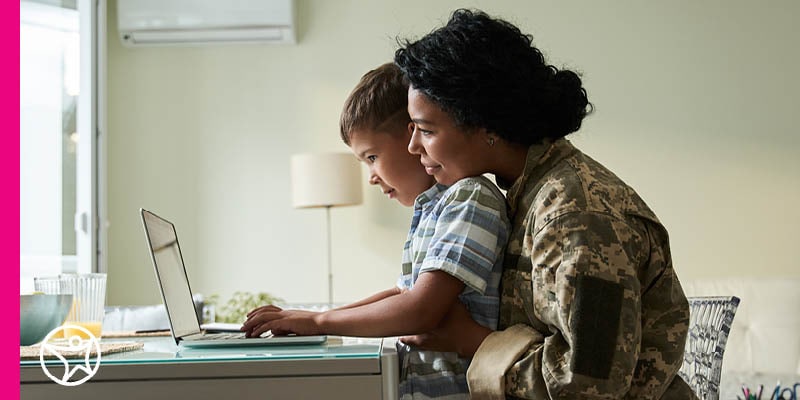
A Learning Coach and student work on an assignment based on Common Core Standards.
E-guide for Connections Academy with a green background and a graphic of a laptop with the purple eGuide.

Ready to Learn More

About Connections Academy?

Explore the benefits of attending Connections Academy, a tuition-free, accredited online public school that’s passionate about helping your child thrive.  

Get Your Free eGuide


Related Posts

  • How to Make Your Own Halloween Costume

    by Beth Werrell

    A family is dressed for Halloween and holding photo props

    Halloween can be a fun holiday for kids and adults, but at least half of that fun is picking a costume that gets a fun reaction from people. Not every Halloween costume is a showstopper, though, and some have become clichés through overuse. With so many people out there reusing, repurposing, and reinventing costumes, how do you find a killer costume idea?

    Many unique ideas are put together for individual and group costumes, some complex and some simple. With a little thought and creativity, you can put together original Halloween costume ideas or a new spin on a tried-and-true one. To help get you started, Connections Academy can provide some fun costumes for this year’s Halloween season.

    YouTuber

    Finding inspiration for how to make your own Halloween costume can be difficult. However, because YouTube is a very popular platform right now, dressing as an online influencer is a way to get noticed by fans of that YouTuber. Some of the more easily recognized YouTubers include Miranda Sings, Dan and Phil, and Pewdiepie.

    Best Friend Costumes

    Sometimes the best costumes are created in groups. If you and your friends are feeling inspired, head down to the thrift store to make awesome costume combinations. Some fun couple Halloween costume ideas include Mermaid Man and Barnacle Boy from SpongeBob SquarePants, Pooh and Tigger from Winnie the Pooh, and Peter Pan and his shadow.

    The Doctor from Doctor Who

    Doctor Who is a popular science fiction television show, and it’s no wonder people often dress up as the doctor himself. Since the main character changes often, there may be many Doctor Who clothing options! Grab a bow tie, suspenders, and a leather jacket, or find a friend to dress up as a fellow movie character!

    Pop ’Til You Drop

    Pop culture Halloween costumes are very popular (pardon the pun; more on those later), but most of them tend to be a bit predictable. Instead of going for the obvious main characters from TV, movies, and video games, go for supporting characters, combo characters, or even objects.

    If you are interested in Doctor Who, you could go as the Tardis (a large cardboard box painted blue will do just fine). Instead of going as Captain Jack Sparrow or Jack Skellington, go as Captain Jack Skellington. Rather than dressing as the main Harry Potter characters, Harry, Ron, or Hermione, you could shave your head, Sharpie a face on the back, and grab a turban to go as Professor Quirrell.

    With these less traditional costumes, you’re likely to be the most clever costume of the evening.

    Sidekick

    It’s pretty common on Halloween to dress as a superhero, but sidekicks need love as well. Those who dare to be different and don a sidekick Halloween costume can go trick-or-treating as Robin from Batman, Patrick from SpongeBob SquarePants, or even Stitch from Lilo and Stitch.

    Dynamic Duos (and Groups)

    You can make a costume with great impact with a partner or group. Try going as the Mario Brothers’ red mushroom and green mushroom, or red shell and green shell. Or grab a group and go as a roller coaster. For more sport-minded individuals, try dressing up like wizards, dwarves, and elves (stay with us), then donning football gear to build a “fantasy” football team.

    If you’re pressed for time or materials, grab a buddy and two white shirts, and draw the letter I on each of them (the shirts, not the buddy). The the two of you can go as “right I” and “left I.” For those with the time to think past the low-hanging fruit, the possibilities are endless.

    Your Worst Nightmares

    Now for some truly frightening costumes, none of which require any fake blood. First, some ghoulish face paint, a black shirt, and a little bit of arts-and-crafts skill can turn you and a friend into “dead battery” and “dead service.” A black funeral-worthy outfit, some painted-on tears, and a name tag that reads “Monday” can turn you into “Monday Mourning.”

    And for one that takes almost no effort, make a giant cardboard cookie and wear a pair of boxing gloves to be a “tough cookie.” You may have noticed that many of these are puns or, at the very least, count as a play on words. We warn you, we’re only getting started.

    Punning for Your Life

    Some of the most inventive Halloween costumes are based on puns and familiar sayings, and many of them are incredibly easy to create. Attaching a collection of Smarties candy to an old pair of pants makes you a “Smarty-pants.” A rain outfit with cutout cats and dogs attached on strings to an umbrella makes you “Raining cats and dogs.” A pig costume with a blanket wrapped around you makes you “Pigs in a blanket.”

    For those with red hair (or those willing to fake it with a wig or dye), having some bread on hand makes you a “gingerbread man (or woman).” A Netflix T-shirt and a bag of ice (or a small cooler) makes you “Netflix and chill.” A “sand-witch” can be created with a witch’s hat combined with other attire that invokes the beach (such as a bathing suit and a beach towel).

    And really, this list could go on and on, but we don’t want to put you through any more punishment.

    Halloween can be a great time to impress friends, family members, and partygoers with your inventiveness and ingenuity. Done right, your costume will be one that’s remembered for years to come. So rather than simply grabbing something off the rack at Walmart, try brainstorming how to make your own Halloween costume, and you (and those who see you) will likely be happy with the results.

    To learn how you can enjoy more family time and be more involved in your child’s education through online public school, visit the Connections Academy website. Or to learn about online private school, visit Pearson Online Academy ’s website.

    read more
  • Pre-K Games and Activities That Prepare Your Child for Elementary School

    by Beth Werrell

    Two kids playing with colorful blocks

    Preparing a child for kindergarten can be exciting, but it can also be daunting. After all, it has probably been two or three decades since you were a kindergartner yourself, and even then, a lot has changed in that time. In a very real way, we’re taking a shot in the dark as parents, trying to get a child ready when we’re not sure ourselves what she will be doing.

    Don’t let the uncertainty scare you. There’s a lot that can be done to prepare children for their first year in elementary school, and none of it requires a degree in teaching or early childhood development. With the right activities and just a little bit of quality time with your little one, you can have her ready for anything that the teacher can throw at her.

    Building Math Skills

    In kindergarten, depending on what school district you’re a part of, your child is likely to learn basic counting, basic addition, and basic subtraction. Largely, what teachers are going for is helping students associate the actual value with the number (e.g., they want the student to immediately recognize how much five is when they see the numeral 5).

    To help your child prepare for that, you can have him practice associating either the written symbol or the spoken word with the actual value. That’s a rather verbose way of saying “have him practice counting with things he can hold in his hands.” Here are some suggestions for how to do just that:

    Cleanup Counting

    Have the child clean up with you after play and practice counting to see how many items she can pick up. Compete to see who can pick up more (letting her win, of course). Once she has counted down, try asking simple addition or subtraction questions like “How many are left to put away?” and “How many are in the bucket now?” With any luck, practicing like this will have the added bonus of motivating your young one to clean up willingly after playtime.

    Playing Sous Chef

    Try cooking together with your child, having him count ingredients, scoops, and mixing strokes. Have him set the table, counting out how many plates, cups, and utensils the family needs. While having him participate during meal preparation will likely slow things down, it will give him a chance to practice, and he will likely be more excited about mealtime as a result.

    Getting the Wiggles Out

    Some games and physical activities lend themselves well to practicing counting. Games like hide-and-go-seek have counting built in, while activities like jump rope, jumping jacks, stretches, push-ups, and so forth all provide something for your child to associate the counting with. Exercises like this also double as gross motor skill activities, which we’ll talk about later.

    Building Language Skills

    While your future kindergartener has already learned how to talk and communicate clearly (for the most part), she hasn’t quite mastered the language yet. For one thing, her vocabulary is still fairly limited. For another, chances are she’s not yet reading on her own. Remember, at this stage, most of what she knows about language she has intuited, piecing things together by listening to you. There’s still a great deal about the mechanics she stands to learn.

    Much of that learning will happen as she begins to read on her own and as that reading happens with more frequency. That’s why doing what you can to prepare her for the basic reading she’ll be doing in kindergarten will be so useful.

    Build an Alphabet Book

    Kindergarten classes tend to begin their language learning by working on the alphabet. After all, it’s difficult to learn to read if you don’t know what all those little symbols mean. You can help prepare your child for that first step by building an alphabet book together.

    How you do this is up to you. You can draw an outline of the letter on the page and have your child color it in. Or you could write the letter as dotted lines and allow him to trace the letter. Get creative, involve your child in the process, and provide a little help where needed. Then, when each letter is done, staple or bind the book together and display it as the work of art it is.

    This book can be used to review letters and teach your child what they look like when they’re written, allowing her to begin associating the sounds with the written symbols.

    Read a Book Together

    One of the simplest things you can do to help your child understand language better is to read with her on a regular basis. This time-tested standby of proactive parenting yields many benefits. It’s bonding time for you and your child. It helps her calm down and get ready for bed in the evening. It exposes her to the thoughts and ideas of other people and helps her learn about things both common and exotic. And, done properly, it can help children learn to read.

    Try pointing out common words (often called “sight words” by teachers) that you can help your child memorize and recognize immediately. Once she starts getting the hang of words like this, point to them as you read, and have her read the word for you. Over time, this helps build her reading vocabulary and can dramatically increase her reading speed.

    For bonus points, discuss the book with the child as you read, and when the book is done see if she can relate the story back to you, as these steps encourage deeper thinking and improve reading comprehension.

    Play I Spy with Letters

    I spy can be a very versatile game, as you’ll see below, and with a little creativity it can serve a number of different purposes. Here, it can help your child to recognize letters in things he sees. It’s fairly common for children to do this on their own anyway, but your little one will likely be all the more proud of what he finds when you’re actively involved.

    Prompt your young learner by giving him a letter to look for when you’re reading, driving around, or doing anything that provides ample opportunity for reading. Watch as his eyes light up at the challenge, and praise him when he succeeds. You may find, as he learns to string these letters together, that this will lead to sounding out words and full-on reading in time.

    Building Science Skills

    At this stage, it’s less important to bury your little one in facts and information and more important to give her a reason to be excited about the laws that govern the world around her. Helping her see scientific principles in action will likely pique her interest and have her asking questions about why things work the way they do.

    There are some simple experiments that can be done to illustrate principles that children interact with on a regular basis but don’t notice. Here are a few:

    • Demonstrate the water cycle—use a boiling pot of water or a hot shower to produce steam, and then place a cold object nearby (like a glass of water or a can of cold soda on the counter next to the stove) to cause condensation.
    • Demonstrate static electricity—rub an inflated balloon on your head (or your child’s) to generate static, then see what the balloon will stick to, or try discharging the static on something metallic.
    • Demonstrate afterimages—use a flipbook to illustrate the afterimage principle; it’s the same principle that movies use to turn static images into “motion pictures.”

    When all else fails, go outside and hunt for bugs, frogs, birds, and other creatures that your child can identify and observe. When you find some interesting specimens, look up more information about the creature online to see what fun things you can learn together.

    Building Motor Skills

    Motor skills fall into two categories: gross motor skills (how your body moves as a whole) and fine motor skills (the use of the hands to accomplish delicate tasks). Here’s an example to illustrate: As a baby learns to walk, he is developing gross motor skills. As he learns to pick up gummy snacks by pinching them, rather than by using his whole hand to grasp them, he’s developing fine motor skills.

    Even as a five- or six-year-old, your child is still developing his gross and fine motor skills. He’ll practice using both in school, so doing things to help him develop his dexterity and learn to control his body will be useful regardless of the type of activity you choose. Below are some ideas.

    Develop gross motor skills by:

    • Teaching how to do somersaults.
    • Holding races and playing tag.
    • Playing catch.
    • Choreographing a dance together.
    • Coming up with a fancy secret handshake.

    Develop fine motor skills by:

    • Creating a collage by cutting out shapes with safety scissors; help by outlining shapes for your child to cut.
    • Practicing tying and untying knots.
    • Practicing writing the child’s name.
    • Practicing sign language letters.
    • Playing a computer or video game together.

    As most kids like to be active during this stage, most of these activities will have them excited to participate, so you’re likely to have a willing participant as you implement this kind of education.

    Building Social Skills

    For oldest children, only children, and children who are much younger than their siblings, social skills aren’t always easy to develop prior to school. Still, there are things you can do to prepare them for interacting with other children in a healthy manner.

    Try introducing your child to other children her age. If she already has friends of her own, invite them over for playdates. When conflicts arise, teach her healthy methods of negotiating such situations and how to avoid unfriendly behaviors.

    Playing board and card games can also teach your child a great deal. By playing structured games, your child can learn to take turns, follow instructions, how to be a good sport, how to avoid being upset when losing, and how to avoid gloating when winning.

    Also, as your child prepares for school, it’s important that she know how to handle separation from her primary caregivers. Give her some practice by letting her play at a friend’s house, leaving her with a babysitter for date night, or by leaving her to play at a friend’s or relative’s birthday party (where appropriate).

    Lastly, remember that you are the child’s primary example for how to interact with other people. Set a good example of the kinds of behavior you want to see, and your child will likely follow suit.

    Building Cognitive Skills

    Not everyone is aware of this, but IQs are not set in stone. Though your child can work on increasing cognitive prowess at any age, early childhood is especially influential to developing a high IQ. This makes prekindergarten a great time to stimulate higher brain functions in your child, and it can be done with some surprisingly simple activities. Here are a few:

    Play sorting games with your child; give him instructions to sort by similarities such as size, shape, color, etc. Putting silverware away is a good example, as is sorting out the toy box. You can also hold a scavenger hunt for your child, though if leaving clues for specific items seems to advanced, give him instructions to collect things of specific sizes, shapes, or colors.

    For something a little more advanced, try playing variations of I spy by interacting with your child’s various senses:

    • Audio version—have him listen for and identify specific sounds.
    • Tactile version—have him close his eyes and try to guess an item that you put in his hand.
    • Taste version—use something that comes in multiple flavors (drinks, candy, popsicles, etc.) and have him taste test it, asking him to identify which flavor is which.
    • Olfactory version—use scented candles or other products that come in a variety of scents, and have him guess what the smell is.

    Stimulating your child’s senses, and his ability to think and process ideas or instructions, will help him prepare for the kind of learning and thinking he will be doing in school.

    Building Creative Skills

    Even Michelangelo and Shakespeare started somewhere. Whatever your child’s level of proficiency or creativity, encouraging her to engage her creative side will be both fun and beneficial. Here are some ideas:

    • Finger paint with your child.
    • Encourage pretend play, and participate in her imaginary world whenever you can.
    • Role-play with your child; that is, give her a part to play (doctor, tiger, superhero, monster), and let her imagine how that person or creature would act.
    • Use paint, crayons, pencils, or markers to create masterpieces fit for the Museum of Modern Art (or at least the refrigerator).
    • Using an image as a guide, “compete” with your child to see who can recreate it best.

    Lastly, you can try playing “fiddlestick stories” with your child. Do this by helping him invent a story and then taking turns to decide what happens. This is often broken down along sentence-by-sentence lines, alternating the storyteller with each sentence. This can even be a fun family activity, involving as many members as are willing to participate.

    Learning does happen on its own, but a lot can be done to accelerate it and foster it, especially in the home. The better educated a child is on how to learn and understand things, the more self-sufficient he or she will be when doing schoolwork. So use some of these activities to prepare your young student-to-be, and instill a lifelong love of learning.

    For more information on what you can teach your child, to discover what you can expect her to learn in school, or to see sample curricula, for online public school, visit Connections Academy’s website today. To learn about online private school, visit Pearson Online Academy 's website.

    read more
  • Our 10 Favorite Spelling Games for Kids

    by Beth Werrell

    Elementary aged Asian boy wearing glasses and bow-tie building words with letter blocks.

    Learning how to spell can be tedious for kids, and tedium can make anything boring. Every parent is well acquainted with just how little patience most children have for boredom. So ditch the boredom—and the resulting resistance—by "gamifying" spelling exercises. By making learning fun, you increase children’s motivation to do the work. And with their brains more fully engaged, they learn faster.

    We’ve put together a list of our favorite spelling games. Pick a few to try with your little learners to see just how much fun building neural pathways can be.

    Games for Individuals

    Word Searches

    You may have never considered them in this way, but word searches are a good way to teach students the visual appearance of a word. Often, there will be a number of near misses, and your child will have to separate the correct choices from all the mistakes. The word search is a great option for visual learners. If you want to create your own word searches, there are a number of resources that allow you to create them using any words you want, and several of them are free, like the one by Discovery Education.

    Crossword Puzzles

    Similar in concept to word searches, but with an added twist, crossword puzzles are an excellent choice for young readers because they require not only spelling skills (children will trip themselves up if they spell the words incorrectly) but also reading comprehension and problem-solving (in that the crossword clues are similar to riddles). You can also vary the difficulty, making the hints obvious or obscure. If you want a free resource for crossword puzzles, then Discovery Education has your back again with this one.

    Games for Groups

    Spelling Bees

    A good way to test spelling knowledge is to hold a spelling bee. Since it’s not an official competition, you can modify the rules slightly, giving children a chance to rebound from mistakes or keeping a tally of correct answers. That way, nobody is ever eliminated, and everyone gets to feel some accomplishment as they spell some of the words correctly. (Fun little prizes are always a nice surprise, too!)

    Hangman

    A classic game, hangman helps kids work together as a team and can help them learn where they’re spelling a word wrong without feeling solely responsible for mistakes. Be sure to incentivize the team by awarding points or handing out some form of reward to get them excited about winning.

    Vanishing Man

    Vanishing Man is like hangman in reverse—you break the players into two teams (which can be as small as one player each) and draw stick figures for each team. The goal is to get the stick figure to disappear one body part at a time as the contestants spell words correctly. The team that makes their vanishing man invisible first wins. Feel free to vary the difficulty of words if you have players of different ages and ability levels.

    Spelling Battleship

    We borrow this one from Deceptively Educational: “Take the traditional game of battleship and turn it into a spelling game.” This is a great choice for groups of children at similar grade levels who can be paired up.

    Active Games

    Phonics Jumping Game

    This one, which we found on Learners in Bloom, is great for kids who like to make a little noise. “To play, we turned the words over and the girls (and Mom) took turns picking a word. For each turn, the player [who] picked the word had to sound it out and then jump on the letters in order. I usually called out the phonetic sounds of each letter in order as they jumped, but older kids could be invited to remember the order of the letters themselves by sounding out the word slowly as they jump.” And it’s always great to pair movement and learning!

    Slap the Word

    Another great game for getting the wiggles out, Slap the Word is very simple. Put a group of similarly spelled words on a board, and give two players each a flyswatter. Call out words from the board. Whoever correctly locates and slaps the word wins a point. If you have more than two players, have them take turns to share in the fun.

    For Advanced Students

    Scrabble

    It’s been said that “good artists borrow; great artists steal” (a quote that, fittingly, has been attributed to nearly every prominent writer). We’re not encouraging the theft of this board game, but we are suggesting that you don’t necessarily have to build your own activity when someone else has done the work for you. Pick up a copy of the game, or pull your old Scrabble board out of the closet, and start playing.

    If you want to aim at specific spelling words, try setting up the board with the words partially spelled already, or pick out the letters you give to the players.

    Spelling Pong

    This game, which comes by way of Busy Teacher, is a little more free-form and requires the players to have a larger repertoire of words they know how to spell. Take a collection of cups (preferably disposable ones) and write a letter on the bottom of each of them. Then line them up in a grid on a table. Each player takes turns bouncing a Ping-Pong ball into one of the cups. Then the player has to spell a word using the letter on the bottom.

    To increase the challenge, see how many words players can spell within a certain amount of time. For larger groups, set up two grids and have two players race to see who can spell a word first.

    And there you have it: a variety of fun ways to convince your children to practice their spelling. Feel free to invite the rest of the family or a group of your children’s friends. Odds are, they’ll have so much fun that they won’t even be bothered that they’re learning, which is, of course, the best kind of education.

    read more