Can Online School Close the COVID Learning Gap?

3 min to read
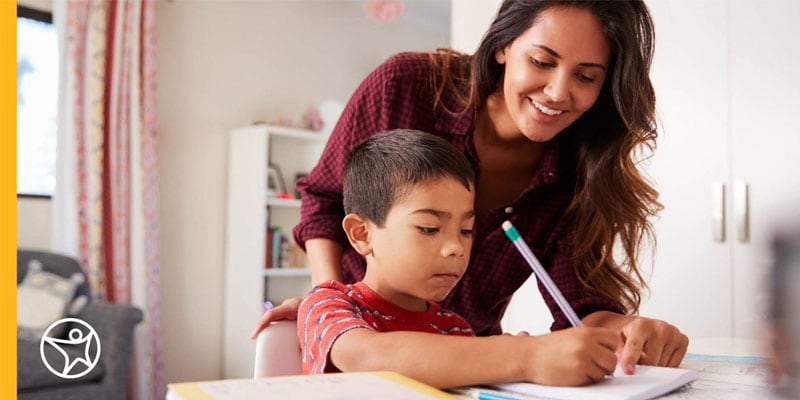
Connections Academy Student in a blue striped shirt writing on a piece of paper working on their school work.

The onset of the COVID-19 pandemic disrupted every part of our lives, including our children’s education. School closings due to COVID required most public school districts to implement virtual school as an emergency measure. While teachers and students did their best to make the arrangement work, many students fell behind. And that has caused a so-called COVID learning gap. 

Education experts agree that reversing COVID learning loss will require educators to embrace everything from flexibility to focused intervention. But parents can play an important role as well. And that can begin by choosing an online public school for your child. 

Why Would Online School Help COVID Learning Loss?

To understand how we can close the COVID learning gap, it’s important to understand that the gap wasn’t caused by virtual learning. Specifically, the general disruptions of the pandemic, the difficulties that in-person schools faced when converting to an emergency teaching format, and a loss of student support networks caused many students to tune out or simply not attend class. 

In other words, the COVID school closures led to a multitude of issues unrelated to the nature of online learning. When an online school is specifically designed by education experts, the experience is very different from what in-person schools were able to provide virtually. In fact, a true online school has a lot of benefits. And it’s those benefits that can help with closing the learning gap. 

Top Ways Online School Is Helping Students Close the COVID Learning Gap

If your child fell behind when schools were closed due to COVID, you’ve likely considered alternatives to public school. Even if your child’s academic performance remained consistent during the pandemic, you may be worried about future disruptions or are seeking a school that can help your child go even further. Online school can be the answer—and they’re more accessible than you might think.

For example, the online school, Connections Academy is a public school, which means it’s tuition-free and conforms to state education guidelines. But unlike in-person public schools that went virtual as an emergency measure, online-only public schools were designed by educational experts to be online from the beginning. In fact, Connections Academy has been teaching students online for over 20 years and is a national leader in virtual education. 

Of course, there are some differences between traditional in-person school and online school. And it’s those differences that can help students and parents with closing the learning gap. Specifically, online schools like Connections Academy provide: 

  1. Consistent Learning In an online-only school, there is little worry that external events like a pandemic will shut the school down or even disrupt the daily process of learning. Regaining consistency—and confidence that there won’t be future disruptions—can help students get back on track.   
  2. Tailored Learning  Students in an online school like Connections Academy don’t all follow the same exact learning schedule. Instead, each student has a lot more flexibility, which allows them to adopt a schedule that works best for their learning style and needs. If they need more time on math, they can find it. If they need more breaks to keep their focus high, they can take them. This level of flexibility can be invaluable to students working to catch up or get ahead in their education.  
  3. Parental Involvement  One of the biggest advantages of online school is the active role parents can play in their child’s education. By serving as their child’s learning coach, parents can see where their child is struggling and where they’re excelling. This allows parents to help their child adjust learning schedules/habits and find solutions before a small issue becomes a big one. For parents who are worried about COVID learning loss, more involvement can be the key to helping their child succeed in the future.
  4. Strong Support  At Connections Academy, everything is backed by Pearson, the world’s learning company. The curriculum is designed by education experts to be online, teachers are specially trained for the needs of online learning and both students and parents can find plenty of support from teachers, counselors and administrators. The result is a school experience that can be highly engaging, helping students overcome challenges and reach their goals.

The disruptions of the pandemic left a lot of students a few steps behind. Fortunately, with the right help, COVID learning loss can be nothing more than a temporary setback. For many students, online school can be just the help they need. Learn more about the workings of online school in our article “Parents Bust the Top 5 Virtual School Myths.”

E-guide for Connections Academy with a green background and a graphic of a laptop with the purple eGuide.

Ready to Learn More

About Connections Academy?

Explore the benefits of attending Connections Academy, a tuition-free, accredited online public school that’s passionate about helping your child thrive.  

Get Your Free eGuide


Related Posts

  • How Parents Can Prepare for Online School

    by Stephanie Osorno

    A student is taking notes while looking at a computer

    It’s back-to-school time! If your student will soon be attending an online school for the first time, you will have a significant and exciting new role in his or her education. Actively preparing for and learning about being a Learning Coach will not only build your confidence, but will also help you and your student start the school year off strong.

    Consider the following back-to-school suggestions to help you and your family prepare for a successful year of online school.

    Gear Up for the First Day of School

    • Take advantage of your school’s orientation and events to become more acquainted with the virtual school program. For instance, families enrolling with Connections Academy® can sign up for Online Parent Panels, which are webinars hosted by experienced parents who share their insight, answer questions, and give pointers.
    • Check your computer to be sure it meets the school’s system requirements.
    • Explore the learning management system to get familiar with navigating lessons, communications, and other functions.
    • Set up your student’s learning space in an area free of distractions. You can visit Connections Academy on Pinterest to get back-to-school home classroom ideas(opens in a new tab)!
    • Find out if your school offers tools to help organize your student’s day. If your school provides a to-do list or a list of assignments, make sure you know where to locate each one and how to submit assignments for a grade. With assignments clearly organized, you and your student will feel more in control of the school day.
    • View sample schedules and create a school day schedule using a family planner. Start with this plan, then adjust the learning schedule as needed.
    • Jot down any questions you have about online school and ask your student’s teacher when he or she reaches out at the beginning of the school year.
    • Make sure you and your student are on the same page when it comes to your expectations for online school.

    Parent Tasks to Monitor Schoolwork and Progress

    When going back to school, experienced Learning Coaches recommend that parents complete the following tasks daily:

    • Determine which assignments need to be completed each day.
    • Review any school announcements.
    • Read and respond to messages.
    • Note and address any overdue lessons for your student.

    Here are some additional back-to-school best practices Learning Coaches can do to keep students on track:

    • Review your student’s course calendar each week to check for upcoming tests and projects that require advance preparation.
    • Schedule time for online school sessions, studying, and extracurricular activities.
    • If your student has a specific question about a course, suggest reaching out to the online teacher before you jump in.
    • Review lessons and assignments and submit them at the end of each day.
    • Record attendance daily.
    • When the school day is over, double-check to see if all the required tasks have been completed. Connections Academy parents can monitor the students’ progress from their home page—it will tell them if the student is on track or if he or she needs to catch up.

    You can conquer your new role in virtual school and help your student make the most of his or her online school year by planning ahead, using the school’s resources, and staying organized

    To learn how your child can enjoy the benefits of personalized online learning, visit the website for Connections Academy online public school. Or to learn about online private school, visit Pearson Online Academy ’s website.

    read more
  • Online Teacher vs. Learning Coach: What’s the Difference?

    by Stephanie Osorno

    The Difference Between an Online Teacher vs. Learning Coach

    Teacher and Learning Coach: what was your initial interpretation of these titles? Did you have to think twice because they seemed similar? At first glance, these titles could be construed as synonyms since each involves a degree of leadership for students. When it comes to virtual school, however, teacher and Learning Coach represent two distinct roles.

    So, as the parent of a virtual school student, which role should you be playing? Teachers and Learning Coaches are accountable for several duties that they handle differently, but both collaborate to enhance the student’s online learning experience. If you’re considering online school for your child, we are here to help you determine how to stay within the Learning Coach bubble. Take a look at the various differences between teacher and Learning Coach below to learn more about your specific duties and the ways each role can complement the other!

    Online Teacher vs. Learning Coach

    Virtual schools have certified teachers who are dedicated to helping students succeed—that means a Learning Coach serves as a guide, supporter, and motivator to further stimulate learning and establish a suitable structure for the school day at home. The role of a Learning Coach evolves over time as the student gains confidence and develops more academic skills.

    Among other things, teachers and Learning Coaches oversee daily learning, provide assistance, and monitor progress in different ways.

    Daily Learning

    Breathe easy; it is the teacher's responsibility to teach and provide students with learning material. A Learning Coach is not required to plan any lessons. Instead, he or she should make sure that the student stays focused each school day. Here are a few examples of tasks teachers and Learning Coaches complete to facilitate daily learning:

    Online Teacher

    • Leads the class during real-time virtual classroom sessions
    • Presents new material
    • Plans various lessons for specific subjects
    • Determines which topics will be covered each day

    Learning Coach

    • Encourages breaks throughout the day when appropriate
    • Motivates the student to complete lessons
    • Makes sure the student has enough rest and nutrients for a productive school day
    • Asks the student what he or she learned at the end of each day to maintain open dialogue
    Questions and Assistance

    Since teachers lead the class, it is important that major questions be directed at them—after all, that is what teachers are there for! Learning Coaches can help with small concerns and questions such as, "Am I on the right track?" or "Am I being clear in this essay?" The more students reach out to their teachers, the more they will grow to be independent learners. Here are a few examples of tasks that teachers and Learning Coaches complete to effectively assist students:

    Online Teacher

    • Answers the student’s questions in the virtual classroom, or via phone or WebMail
    • Can offer support through individual online sessions
    • Personalizes lessons based on the student's needs
    • Clarifies any confusion or misunderstanding

    Learning Coach

    • Prompts the student to communicate with the teacher when needed
    • Answers minor questions and assists with assignments but does not resolve the problem or do the work on the student's behalf
    • Reassures the student when he or she is having trouble understanding a concept
    • Implements some learning activities that might help with areas of weakness
    Progress

    Teachers and Learning Coaches both play a key role in monitoring a student’s progress. The two are encouraged to stay in contact throughout the school year to discuss how the student is doing. Here are a few examples of tasks that teachers and Learning Coaches complete to properly monitor a student's progress:

    Online Teacher

    • Communicates frequently with the student to ensure that he or she understands the material before moving on
    • Contacts the Learning Coach to discuss the student’s progress
    • Tracks recent activity
    • Analyzes student performance
    • Works with the student and establishes a plan to tackle subjects that require more practice

    Learning Coach

    • Documents the student's attendance on a daily basis
    • Assists with organization and time management skills
    • Stays in contact with teacher for regular updates and suggestions
    • Ensures that the student is working at an appropriate learning pace

    Even though teachers and Learning Coaches play different roles, the student’s journey to success is a team effort!

    read more