5 Features of Remote Learning That Benefit Neurodivergent Students
by Corissa Hennessey

byConnections Academy
For a student in a bricks-and-mortar school, the first day of school means waiting for the school bus with a backpack of new notebooks and school supplies. But the first day may look quite different for a student enrolled in an online school. Parents tell us that the sense of excitement is the same, but with online school, they do the first day their own way!
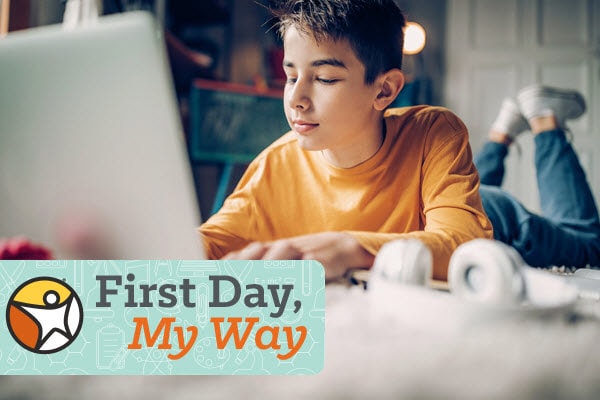
Follow us on social media to learn how online families are celebrating back-to-school time. You can also download—and personalize—a First Day, My Way! sign (downloadable link below) to use in your family’s back-to-school photos. If you share the picture on social media, include #FirstDayMyWay and #CAFirstDay. We also encourage you to tag your school on Facebook or @ConnectionsAcademy on Instagram!
Download the First Day, My Way! sign (This is a PPT file and best used with a desktop computer).
If you’re considering making the change to a Connections AcademyⓇ-supported online public school, check out the following ways that online school lets families learn in their own way.
With online school, students learn from home, where they are comfortable and secure. No missing the bus or waiting for it in the rain. Students connect to their teachers and lessons wherever they have access to the internet, making family travel possible —without falling behind.
Students attending online school can vary the pace at which they do lessons according to their needs. Starting on the first day of school, they can take more time on a subject they struggle with or move ahead quickly in a subject they understand fully.
Each student has a personalized learning plan developed collaboratively by the student, teachers, and parent or Learning Coach. This helps ensure that students receive the right degree of challenge and support, enrichment, or remediation. Elective courses are available for all ages, so students can pursue personal interests as part of their curriculum.
There are caring, dedicated teachers in online school! Although online teachers may not meet their students face to face, they do connect in the online classroom, by phone, and via WebMail messages. There’s even a back-to-school welcome call! They periodically talk to their students on the phone to make sure they understand the material, and are available to help when needed. This one-on-one attention lets teachers get to know students and their families well.
Online school separates learning from socialization. With fewer distractions, some kids may be able to concentrate on their studies more easily. Others may appreciate having less peer pressure. Parents and their students have the opportunity to choose exactly the type and amount of socialization they are comfortable with. Many pursue athletics, performing arts, clubs, volunteering, and faith-based activities in their local communities. And going back to school online may even give students more time for these activities.
The online school schedule enables families to structure the learning day according to personal preferences, student needs, and the family’s lifestyle. Early birds can start school whenever they get up. Sleepyheads can begin later. Students can do their hardest courses when they are most alert. Lessons can also be scheduled around doctor’s appointments, dance lessons, soccer practice, and family obligations.
Parents of students enrolled in online school have many ways to stay involved in their kids’ education. Typically, they support learning by helping set the daily schedule, keeping kids on task, and communicating with the teacher. Parents also have access to grades, texts, curriculum, and other resources, so they know what their children are learning —and how well they are progressing. No report card surprises!
We hope your family is planning to begin learning online as you go back to school. With parent involvement and the ability to personalize learning and each day, online school students have the opportunity to excel and love learning!
To learn how you can customize your student’s education and be more involved by going back to school online, visit the website for Connections Academy online public school. Or to learn about online private school, visit Pearson Online Academy ’s website.
by Corissa Hennessey
by Corissa Hennessey
Becoming an Olympian is a long and arduous path for anyone. From rigorous Olympic training schedules to mastering new skills, it takes a lot of time and determination for athletes to reach the world stage. For many Olympic athletes, finding an education program that allows them to train and continue their K–12 education is critical.
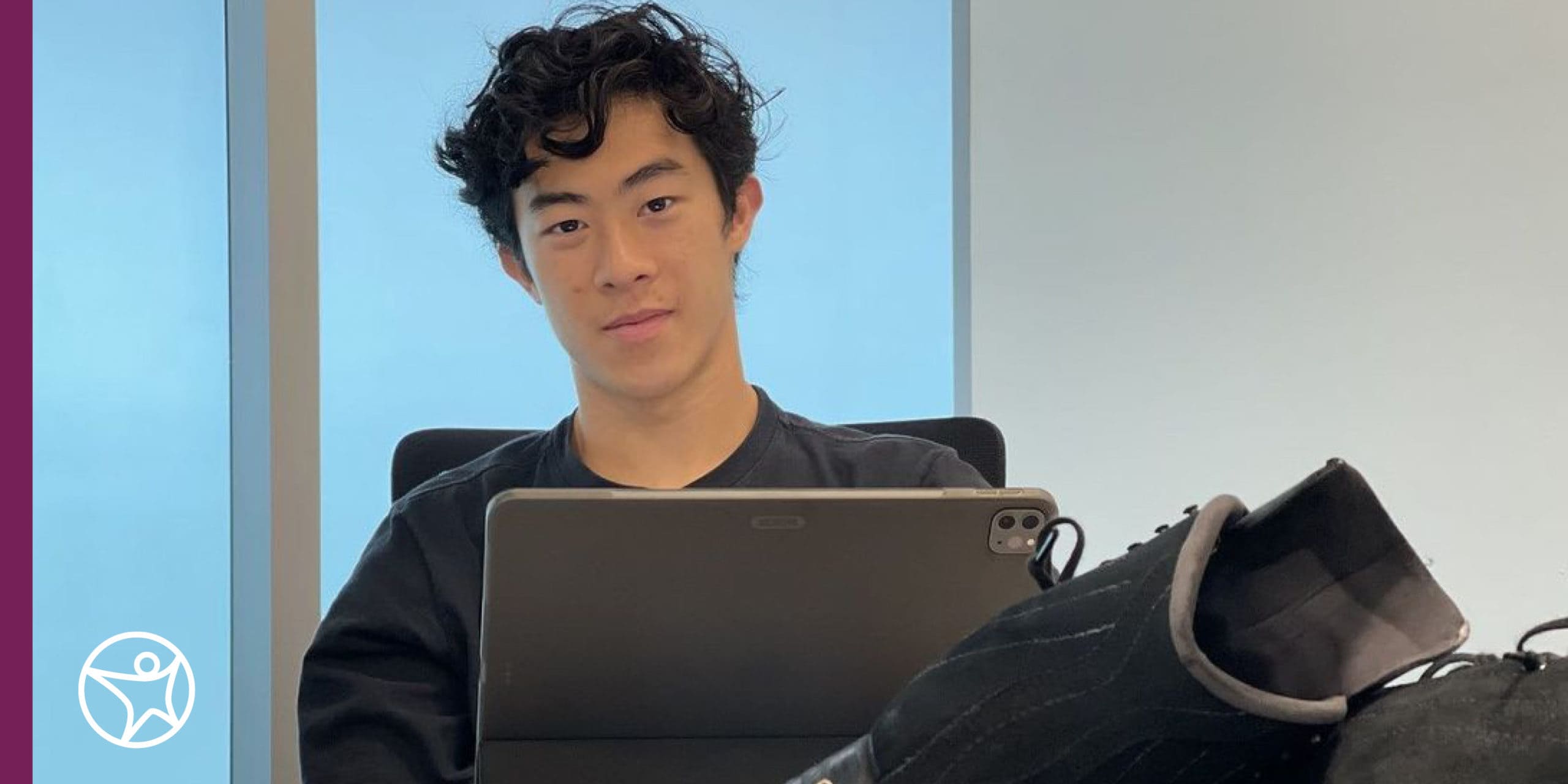
If you tuned in to the Winter Olympic Games this year, you’re familiar with American figure skater Nathan Chen, whose unforgettable performance at the Beijing Olympics earned him a gold medal. But what you may not know about Nathan is that he’s a graduate of Connections Academy®. Nathan took time out of his schedule to chat with us about his firsthand experiences with online learning and how it helped afford him the time to commit to the sport he loves.
Nathan first enrolled in Connections Academy in 2013, and he “knew it would be the right fit” for him. Prior to his enrollment at Connections Academy, he attended traditional in-person schooling. When his training schedule became more rigorous, he and his family wanted a schooling option that would allow him to dedicate more time and energy to training while still receiving a world-class education. That’s when they discovered Connections Academy.
Today, Nathan attends Yale University and is expected to graduate in 2024. He credits Connections Academy’s online learning approach for preparing him for the rigor and independence in college saying,
“Connections Academy’s platform prepared me really well for the independence needed in college, while still providing the one-to-one support I needed to learn.”
While many have preconceived notions about online learning being easy, Nathan said Connections Academy is “just like any other public school—it has a challenging curriculum and high expectations of its students.”
The pandemic created significant barriers to traditional learning, and students, parents, and teachers had to make sudden adjustments, often turning to virtual learning as a solution. At the start of the pandemic, Yale went virtual, and it brought Nathan back to his Connections Academy days that he says taught him how to be resourceful—a skill that he was able to carry over when his college shifted to online.
“Connections Academy helped me learn to be resourceful and that was a skill that directly carried over as college went online.”
As many traditional schools attempted to adapt during the pandemic, it created a lot of confusion about how online learning works. Online learning does not mean that you do everything on your own or without teacher and peer support.
In fact, Nathan’s experience is a testament to Connections Academy’s supportive faculty—he received support and guidance from teachers who were in frequent contact with him through email messages, phone calls, and the live online classroom where he was able to interact with not only with his teachers, but his classmates, too.
Connections Academy students have many opportunities to socialize through live online classroom sessions, field trips, clubs, activities, and more. Many students also get to do more extracurricular activities, just like Nathan and figure skating.
“Connections Academy has a great support system of faculty and staff that really catered to the needs of my learning and scheduling. I felt that I could learn at a pace that was individualized for me.”
Connections Academy helped Nathan prepare for college academics and an unexpected pandemic. It also provided a flexible, virtual learning solution for his unique circumstances, including a busy Olympic training schedule.
“Connections Academy prepared me to be able to balance many different activities at the same time while being able to focus on academics.”
Between receiving an education, figure skate training, and everything else on his plate, Nathan’s experiences have taught him a lot about managing priorities and being resourceful. When it comes to studying, he recommends that students learn skills for budgeting time as things get busier. Learning to budget his time has helped Nathan prioritize his work throughout the day to be more efficient.
“Connections Academy allows for flexible scheduling, so when you have the time, you can make the most of it.”
For students entering Connections Academy, Nathan suggests staying on top of deadlines and leaning on your Learning Coach to help you keep track of assignments and upcoming exams. He encourages students to ask for help anytime they need it, enjoy the process of learning, and take breaks from time to time.
Nathan also shared a helpful tip for current students who want to achieve goals and pursue a dream, encouraging students to lean on their support system and be communicative about how they can work together to overcome challenges.
“Be open in communication. Teachers, parents, coaches, etc., all want the best out of you, so let them know how they can help you.”
After reading about Nathan Chen’s experience with Connections Academy, you may have some questions of your own. If you’re curious about online school, here are a few frequently asked questions (FAQs) along with answers:
Connections Academy schools are full-time, online public schools for students in grades K–12. It means students go to school at home full-time and get all the benefits of a public education, including a close relationship with state-certified teachers and a high-quality curriculum.
Plus, it’s a public school, which means it’s free!
Families choose Connections Academy for many reasons.
Some families choose Connections Academy because their student needs a flexible schedule like Nathan did to allow time for figure skate training. Others attend Connections Academy because they receive more tailored instruction or are advanced learners and can learn at their own pace, and more. Learn more about the ways that Connections Academy supports all types of students.
Connections Academy schools are public schools, so they have state-certified teachers who are specially trained in online instruction. Just like in a traditional school, teachers provide instruction, grade student work, and provide feedback and support. Parents are involved as Learning Coaches and help support student success.
Still have more questions about Connections Academy and how it works? Check out our FAQs here. Or, take our online quiz to see if virtual school is right for your family.
read moreby Corissa Hennessey
Many children with cerebral palsy face daily challenges when it comes to their health, but their education doesn’t have to have the same challenges. For students with cerebral palsy, it’s critical to find a school with an environment that is supportive, safe, and can deliver the special education framework needed for them to thrive in the classroom.
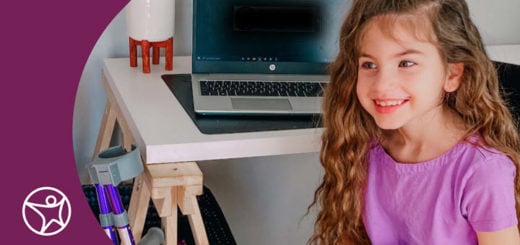
For online student, Abby, Connections Academy® has proven to be such a school. There, she has dedicated support from teachers and her Learning Coach so that she can approach her lessons and daily schedule in a way that works best for her. Abby’s mother and Learning Coach, Emily, is a Connections Academy alum herself, and knows from experience that the virtual school environment is a perfect fit for her daughter’s unique learning needs.
March is Cerebral Palsy Awareness month, and to help bring awareness to cerebral palsy and the benefits of finding success in online school, we’re highlighting how Abby has been achieving and exceeding milestone expectations.
Having attended Connections Academy as a virtual school student for the past two years, Abby’s journey hasn’t been unlike any other student’s experience. On a typical day, Abby wakes up, helps prepare breakfast, spends time with her family, makes her bed, and begins her online school lessons for the day. With her along the way are her two other siblings, one of whom is also a Connections Academy student.
But where her and her brother’s experiences differ is that the flexibility of Connections Academy allows Abby to attend physical therapy and other beneficial activities related to her condition without having to miss school.
As Learning Coach and mom, Emily uses an alternating schedule that allows her to focus one at a time on Abby and Liam’s lessons rather than trying to monitor both kids at the same time. This flexibility in scheduling is what Emily believes makes Connections Academy such a great fit for their family.
As part of her education, Abby has what is called an Individualized Education Program, or IEP, that supports her learning with specialized staff that make modifications in Abby’s lessons to meet her where she is in the learning process. Emily and Abby meet with Abby’s teachers regularly to review her progress and discuss anything that may need to be adjusted for her needs.
“[Connections Academy is] very much work-at-your-own-pace,” Emily said. “I don’t push her. We don’t have to do everything in one day. We don’t work ahead if that’s not what’s beneficial for her.”
To learn more about a typical day for Abby, check out this video sponsored by Connections Academy:
In the United States, about 1 in every 345 children have been diagnosed with cerebral palsy.
Unless you know someone with the disorder, you may not know much about it. An important aspect of Cerebral Palsy Awareness Month (and Cerebral Palsy Awareness Day) includes educating the public on cerebral palsy as well as the educational needs of children who have the condition. To grow your knowledge, here are the answers to common questions you may be wondering about cerebral palsy:
Cerebral Palsy is an umbrella term that encompasses many disorders that affect muscle tone, movement, and posture. Cerebral palsy is caused by a disruption in brain development that can be due to mutations, infections, or brain injuries that occur before, during, or after birth.
And, not all cases of cerebral palsy are the same. In fact, each case is unique. Abby was diagnosed with Dandy-Walker malformation. Her condition is rare and just one of many possible cerebral palsy disorders that affect mobility.
Cerebral palsy is typically diagnosed during a child’s first two years of life. Typically, parents begin seeking a diagnosis when their child is not hitting certain mobility milestones, including crawling, walking, or an age-appropriate use of motor skills. It was for these reasons that Abby’s parents began seeking a diagnosis. They eventually discovered her condition is congenital, meaning it occurred while she was in utero.
Cerebral palsy doesn’t directly affect cognition, but around 30-50% of cerebral palsy cases include co-occurring intellectual or developmental disorders, such as autism spectrum disorder. Due to challenges related to mobility along with a high potential for co-occurring disorders, many students with cerebral palsy can benefit from a virtual learning option.
Students with cerebral palsy face challenges that are highly individualized, and their education often requires a significant amount of personalization. Online school provides students with special needs, like cerebral palsy, with the ability to learn in a safe environment with flexible pacing that allows students to focus on their education and well-being.
If co-occurring with autism, students with cerebral palsy may also have difficulties with verbal language processing, socialization, and sensitivity to sensory stimulation, such as bright lighting and noisy school bells.
Students with cerebral palsy or other special needs have the option to create an IEP that’s tailored to their specific learning needs. IEPs enable students to take a personalized approach to their own education and receive ongoing support and modifications throughout the learning process.
Learn more about how Connections Academy’s online public school program can help students with special needs by finding your local Connections Academy school and connecting with the school’s special education representative.
read more
Explore the benefits of attending Connections Academy, a tuition-free, accredited online public school that’s passionate about helping your child thrive.